What Causes Blossom End Rot? How Soil Health Affects Your Tomatoes
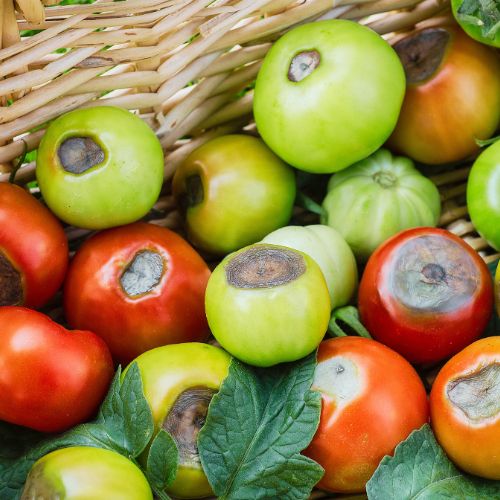
Few things are more disappointing than watching healthy tomato plants develop fruit, only to discover dark, sunken patches appearing on the bottom of the tomatoes as they begin to ripen.
Few things are more disappointing than watching healthy tomato plants develop fruit, only to discover dark, sunken patches appearing on the bottom of the tomatoes as they begin to ripen.
This common problem is known as blossom end rot, and it affects not only tomatoes but also peppers, chillies, courgettes, and aubergines.
The good news is that blossom end rot is not a disease and it cannot spread from plant to plant. However, it is often a sign that something is out of balance within the growing environment.
Understanding the role of soil health can help you prevent blossom end rot and produce healthier, more productive crops.
What is Blossom End Rot?
Blossom end rot appears as a dark brown or black sunken patch on the blossom end of the fruit (the end opposite the stem).
As the fruit develops, the affected area often becomes leathery and may continue to enlarge, rendering the fruit unusable.
While it can look like a fungal disease, blossom end rot is actually a physiological disorder caused by a lack of calcium reaching the developing fruit.
Is Blossom End Rot Caused by a Lack of Calcium in the Soil?
Not always.
One of the biggest misconceptions about blossom end rot is that it automatically means your soil is deficient in calcium.
In many cases, there is sufficient calcium present in the soil. The problem occurs because the plant is unable to transport that calcium effectively to the fruit.
This is why simply adding more fertiliser or calcium products does not always solve the issue.
Common Causes of Blossom End Rot
1. Inconsistent Watering
The most common cause of blossom end rot is irregular watering.
Calcium moves through the plant in water. If the soil repeatedly dries out and is then heavily watered, the plant's ability to transport calcium becomes disrupted.
This is particularly common in:
- Greenhouses
- Grow bags
- Containers
- Raised beds during hot weather
Prevention
- Water consistently
- Avoid allowing soil to completely dry out
- Apply mulch to help retain moisture
- Water deeply rather than little and often
2. Poor Root Development
Healthy roots are essential for nutrient uptake.
Compacted soil, waterlogging, root damage, or restricted root growth can all reduce the plant's ability to access calcium and other nutrients.
Prevention
- Improve soil structure with organic matter
- Avoid compacting the soil around plants
- Ensure containers are large enough
- Promote healthy root development from planting onwards
3. Excessive Fertiliser Use
Applying large amounts of nitrogen-rich fertiliser can encourage rapid leafy growth.
While this may make plants look healthy, it can sometimes increase competition within the plant for water and nutrients, reducing the amount of calcium reaching developing fruit.
Prevention
- Avoid over-fertilising
- Use balanced feeding programmes
- Follow recommended application rates
More fertiliser is not always better.
4. Soil pH Issues
Soil pH affects nutrient availability.
If soil becomes too acidic or too alkaline, plants may struggle to access certain nutrients efficiently, including calcium.
Tomatoes generally grow best in soils with a pH between 6.0 and 6.8.
Prevention
- Monitor soil pH
- Maintain suitable growing conditions for tomatoes
- Add organic matter to support soil health
5. Environmental Stress
Sudden temperature fluctuations, drought stress, and poor growing conditions can all contribute to blossom end rot.
Plants under stress are less efficient at moving water and nutrients around the plant.
Prevention
- Maintain consistent growing conditions
- Water regularly during hot weather
- Provide adequate ventilation in greenhouses
- Avoid unnecessary stress during flowering and fruit development
Why Soil Health Matters
Blossom end rot highlights an important point: healthy plant growth depends on healthy soil. Soil does far more than simply hold plants upright; it acts as a living ecosystem that supports every stage of plant development. Healthy soil helps retain moisture during dry periods, supports strong root growth, stores and cycles nutrients, encourages beneficial soil organisms, and improves a plant's resilience to environmental stresses. When soil structure is poor, organic matter levels are low, or nutrient availability is unbalanced, plants are more likely to struggle and develop issues such as blossom end rot.
The Role of Organic Matter
Organic matter plays a vital role in reducing the risk of blossom end rot.
Adding compost, well-rotted manure, leaf mould, or other organic materials can help; improve water retention, enhance soil structure, support beneficial soil biology and create a buffer against periods of drought, helping to create a more stable growing environment for tomatoes and other fruiting crops.
Can Soil Testing Help?
Blossom end rot is not always caused by a lack of calcium in the soil, but understanding your soil conditions can help identify factors that may contribute to the problem.
A soil test can provide valuable information about:
- Soil pH
- Nutrient levels
- Organic matter status
- Potential nutrient imbalances
This information can help make informed decisions about soil management, fertiliser use, and amendments rather than relying on guesswork.
How to Prevent Blossom End Rot
To reduce the risk of blossom end rot:
✓ Water consistently throughout the growing season
✓ Mulch around plants to conserve moisture
✓ Improve soil structure with organic matter
✓ Avoid excessive nitrogen fertiliser applications
✓ Maintain suitable soil pH
✓ Promote strong root development
✓ Reduce plant stress wherever possible
Blossom end rot can be frustrating, but it is often a symptom of wider issues relating to water management, root health, and soil conditions.
By focusing on soil health and creating a stable growing environment, the risk of blossom end rot can be significantly reduced. Healthy soil doesn't just help prevent problems, it provides the foundation for successful growing season after season.